
Titus Presses Congress to Reverse “Phantom Income” Tax on Gamblers
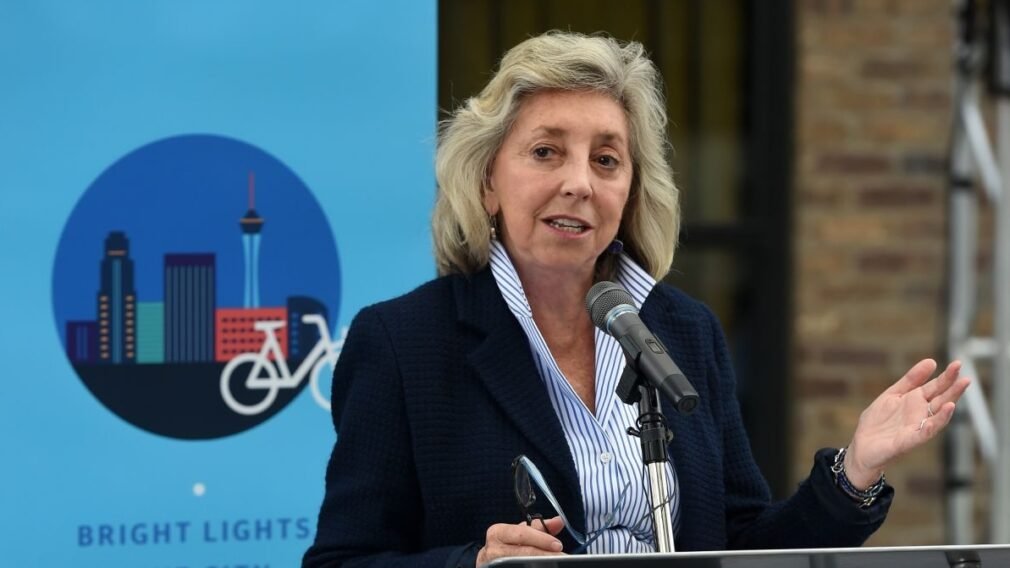
Representative Dina Titus (D-NV) launched a renewed legislative offensive to alter the federal tax code before the calendar year concludes. Titus formally requested that the House Ways and Means Committee add the “Fair Accounting for Income Realized from Betting Earnings Taxation Act” (FAIR BET Act) to its immediate schedule.
The legislation seeks to repeal specific provisions within the “One Big Beautiful Bill Act” (OBBBA) that have increased the tax burden on both professional and recreational gamblers.
Despite her urgent appeals, the committee’s public calendar currently shows no plans to review the bill. Political analysts suggest the window for passing the measure in 2025 is narrowing rapidly.
Earlier this year the BS Budget Bill reduced the tax deduction for gambling losses to 90%.
In response, I introduced the FAIR BET Act to restore the commonsense 100% tax deduction to protect professional and recreational gamblers. I was the first in Congress to introduce this…
— Dina Titus (@repdinatitus) December 1, 2025
The Mathematics of the 90% Cap
Prior to this legislation, U.S. taxpayers could deduct gambling losses up to the full amount of their gambling winnings. The OBBBA lowered this deduction cap to 90%.
Under the current rules, a player who wins $100,000 and loses $100,000 — resulting in a net profit of zero — is only permitted to deduct $90,000 in losses.
This leaves $10,000 of “phantom income” that is subject to federal taxation, even though the player generated no actual profit.
Titus argues that this system effectively penalizes participation in the gaming market. She contends that taxing money that was never actually retained could force professional bettors out of the legal market and into unregulated offshore exchanges.
The FAIR BET Act proposes a simple reversion to the pre-July status quo: restoring the 100% deduction for wagering losses.
Legislative Strategy and Bipartisan Support
Titus has spent the latter half of 2025 attempting to maneuver this bill through the House. In September 2025, she attempted to attach the FAIR BET Act as an amendment to the National Defense Authorization Act (NDAA) for fiscal year 2026.
However, the House Rules Committee, which determines which amendments reach the floor, rejected the proposal, forcing Titus to seek alternative legislative vehicles.
To build momentum, Titus has assembled a coalition of supporters across party lines. By early December, the bill had attracted 21 bipartisan co-sponsors.
Recent additions to the roster include Republican Representatives Mike Ezell of Mississippi and Troy Nehls of Texas.
Titus also took the issue directly to her constituency. On August 11, she hosted a town hall meeting in Las Vegas to discuss the financial impact of the OBBBA.
The panel included tax experts and industry figures, such as Virginia Valentine of the Nevada Resort Association, who outlined the operational risks the new tax structure poses to the regulated gaming ecosystem.
Public Statement
Titus took to social media to highlight the urgency of the situation and the bipartisan nature of her solution:
“Earlier this year the BS Budget Bill reduced the tax deduction for gambling losses to 90%. In response, I introduced the FAIR BET Act to restore the commonsense 100% tax deduction to protect professional and recreational gamblers. I was the first in Congress to introduce this fix and haven’t stopped garnering support from members and stakeholders since. In fact, the #FAIRBETAct has up to 21 bipartisan co-sponsors with @RepEzell most recently joining! It is now critical for @WaysandMeansGOP to add this bill to the legislative calendar before the year ends. We must get this fixed.”
Recommended